First, the name Jehovah
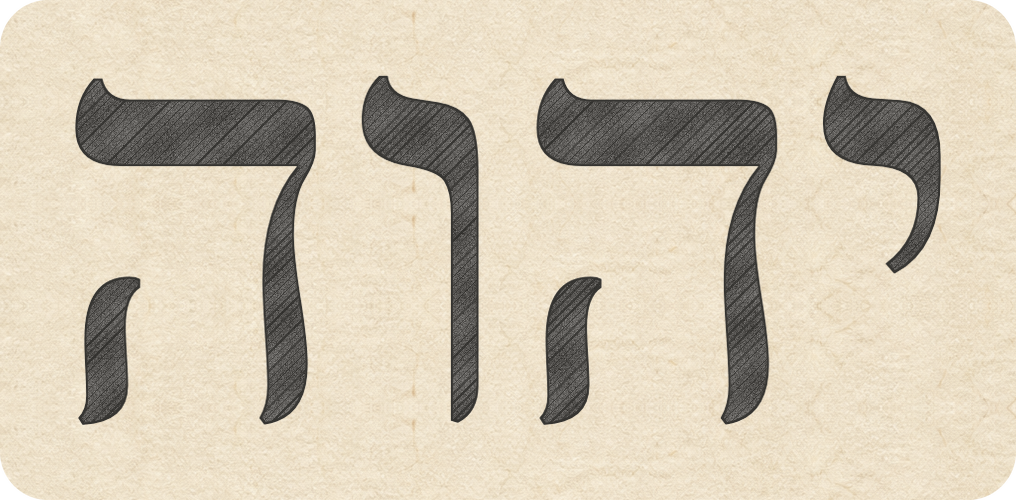
Before we get to Jehovah Jireh, we need to get one name squared away: Jehovah itself. The compound names that follow are built on it — Jehovah Jireh, Jehovah Rapha, Jehovah Nissi, and others — so it’s worth a few minutes here.
Jehovah is the sacred, personal name of Israel’s God. In Hebrew it is four letters — YHWH — and Jews have long regarded it as the most holy, most glorious name of God. It gripped them with so much awe that they would not pronounce it. For centuries it was spoken aloud only by the priests worshiping in the Jerusalem Temple, and after the Temple was destroyed in AD 70, the spoken name fell silent altogether. When readers came to YHWH in the text, they substituted Adonai — “Lord” — rather than speak the name itself.
The scribes treated even the writing of the name with exceptional reverence. Scribal law required deliberate, holy intention before a scribe could pen the sacred name, and some later scribes practiced ritual immersion — a full bath — before writing it.
You can see all of this, quietly, in your own Bible. When you read “Lord” with a capital L, the Hebrew underneath is Adonai. When you read “LORD” in all capitals, the Hebrew underneath is YHWH — Yahweh. That’s the convention nearly every modern translation uses. And the word Jehovah? That’s what you get when the consonants YHWH are combined with the vowels of Adonai — the traditional English rendering of the same name. Jehovah and Yahweh are the same name of the same God; one is the older English form, the other is closer to the original Hebrew.
The name comes from the Hebrew root “to be.” God defined it Himself, from the burning bush, when Moses asked who he should say had sent him:
God said to Moses, “I AM WHO I AM. This is what you are to say to the Israelites: ‘I AM has sent me to you.’” God also said to Moses, “Say to the Israelites, ‘The LORD, the God of your fathers — the God of Abraham, the God of Isaac and the God of Jacob — has sent me to you.’ This is my name forever, the name you shall call me from generation to generation.”
(Notice “the LORD” in all capitals — there’s the convention, right in the verse where the name is given.)
I AM WHO I AM. The name conveys that God is not only self-existent — depending on nothing and no one for His being — but that He is always present with His people. To Moses and to the Israelites, Yahweh would forever mean deliverance, freedom, promise, power, and provision: shoes that didn’t wear out for forty years, manna to eat every morning, water from a rock. And when they got tired of the bread every morning, God provided quail.
He is the eternal I AM — the Alpha and the Omega, the same yesterday, today, and forever. So why do we look elsewhere? Why can’t we rest in His unchangeableness? Has He ever failed? When you need assurance that God is there, keeping His promises, never changing — even though you have wavered in yours to Him — run to your Jehovah. Trust in His name. He’s always been there; He’ll always be there. And if God seems different to you right now — maybe closer, maybe farther away — who has changed?
Jehovah Jireh — the Lord who provides
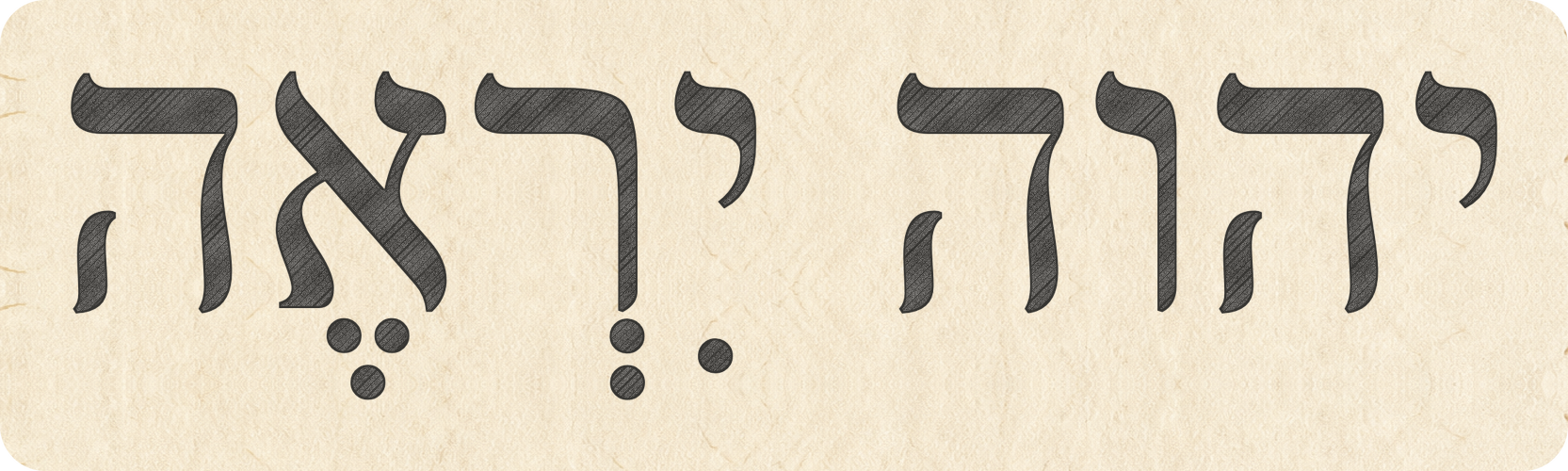
Now for the first of the compound names, and it was given on the hardest day of Abraham’s life.
God tested Abraham: take your son, your only son, whom you love, and offer him on a mountain in Moriah. Read Genesis 22:1–19 slowly sometime and put yourself in Abraham’s sandals. I’m sure his heart was terrified. But look at his obedience: he got up early the next morning, cut the wood himself, and walked three days with his son beside him. When Isaac asked the question that must have gone through his father like a knife — where is the lamb? — Abraham gave the only answer he had: “God himself will provide the lamb, my son.” He didn’t know how. He said it anyway. God had a plan, even though Abraham was unaware of it.
You know how it ends: the altar, the wood, the knife raised — and the voice from heaven stopping his hand. And there, caught by its horns in a thicket, a ram. God’s provision, already on the mountain, walking up the other side the whole time Abraham was walking up his.
Abraham named that place Yahweh Yireh. It is still said today, “On the mountain of Yahweh it will be provided.”
Ann Spangler puts it this way: “Since God sees the future as well as the past and the present, he is able to anticipate and provide for what is needed.” In fact, our English word “provision” is built from two Latin words that mean “to see beforehand.” That’s the whole name in one etymology: the Lord who provides is the Lord who sees ahead. God knows what we need, even before we do.
And the lesson of Moriah is the lesson of this name: there is no limit to God’s power to do what He says — if we believe and obey. Abraham’s part was obedience with a terrified heart. God’s part was the ram in the thicket. It has been that way ever since.